In a cycle, nature inspires science, which inspires art, which inspires science again. I found out through my reading this week that hammerheads curiously swim, rolled to an angle of about 45o, funny thing to do right? Even funnier is that this clever behaviour, which has inadvertently inspired some lift mechanics in marine engineering, has its roots in laziness. By engaging their abnormally large dorsal fins, scalloped hammerheads generate lift from 3 fins instead of two, reducing their need to swim to stay afloat in the water!
Fishy behaviour has inspired me and my writing this week, as my long periods of diving with the same creatures has lead me to notice quirks in their behaviour which I wish to share. Much of this behaviour I can only explain with theories, but my hope is focus on these theories and use them to influence my plans for marine conservation in the future.
A sea of individuals.
There are thousands of different species on the reefs around Savusavu, from the most minute juveniles who display some of the brightest colours to warn off predators large enough to swallow them whole, all the way to colossal hunters, designed for maximum efficiency, speed, and raw power.
What has been captivating my mind while I stare eye to eye with these wonderful creatures is; what is this fish thinking when it makes eye contact with me? I feel so strongly that when they purposefully lock our gaze, there are thoughts behind those mystic eyes.
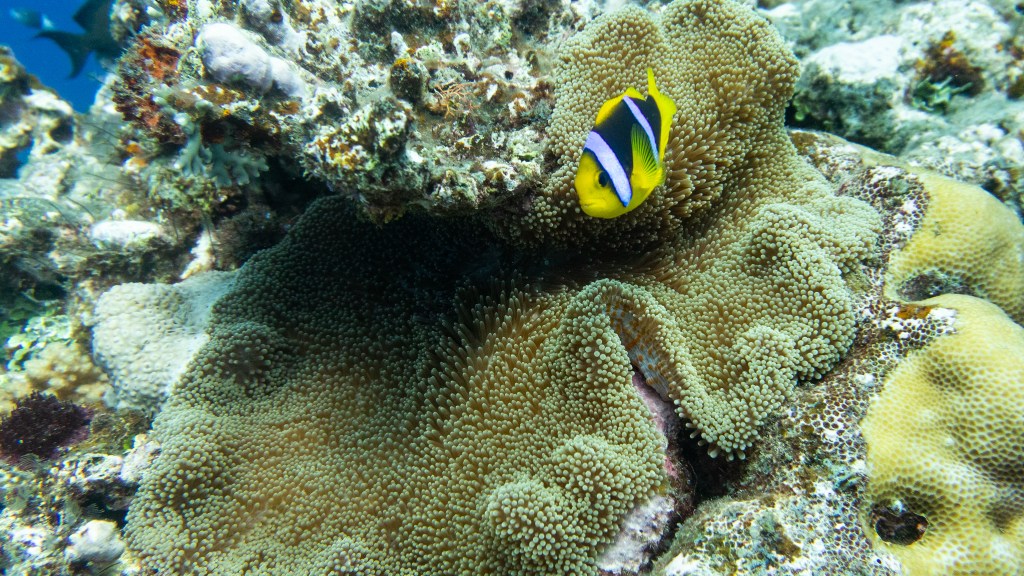
The clownfish may only be small, but get too close to their beloved anemone and you certainly know they’re watching you.
We had a running joke in Thailand that goes like this: How do you know when there is a shark in the water? You stick your tongue out, and if the water is salty there must be a shark nearby… However if you are one of the lucky few who finds yourselves staring into the eye of an ocean giant – the whale shark – when you stick out your tongue, the water turns sweet.
While only satire, there is a metaphorical element that runs true. There is an emotional sweetness to the moment that these creatures make the decision to allow you to peer into their gemstone eyes.
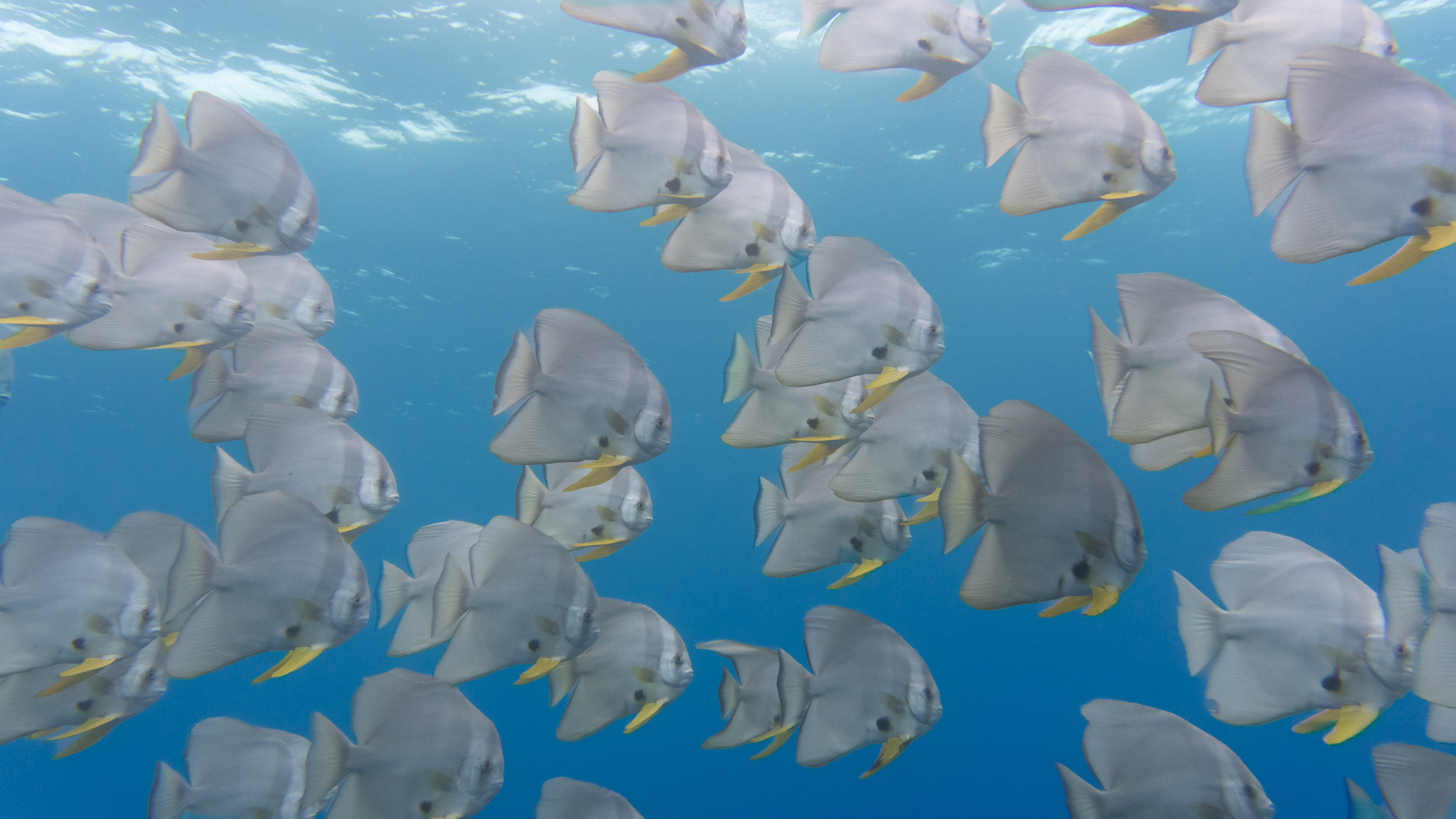
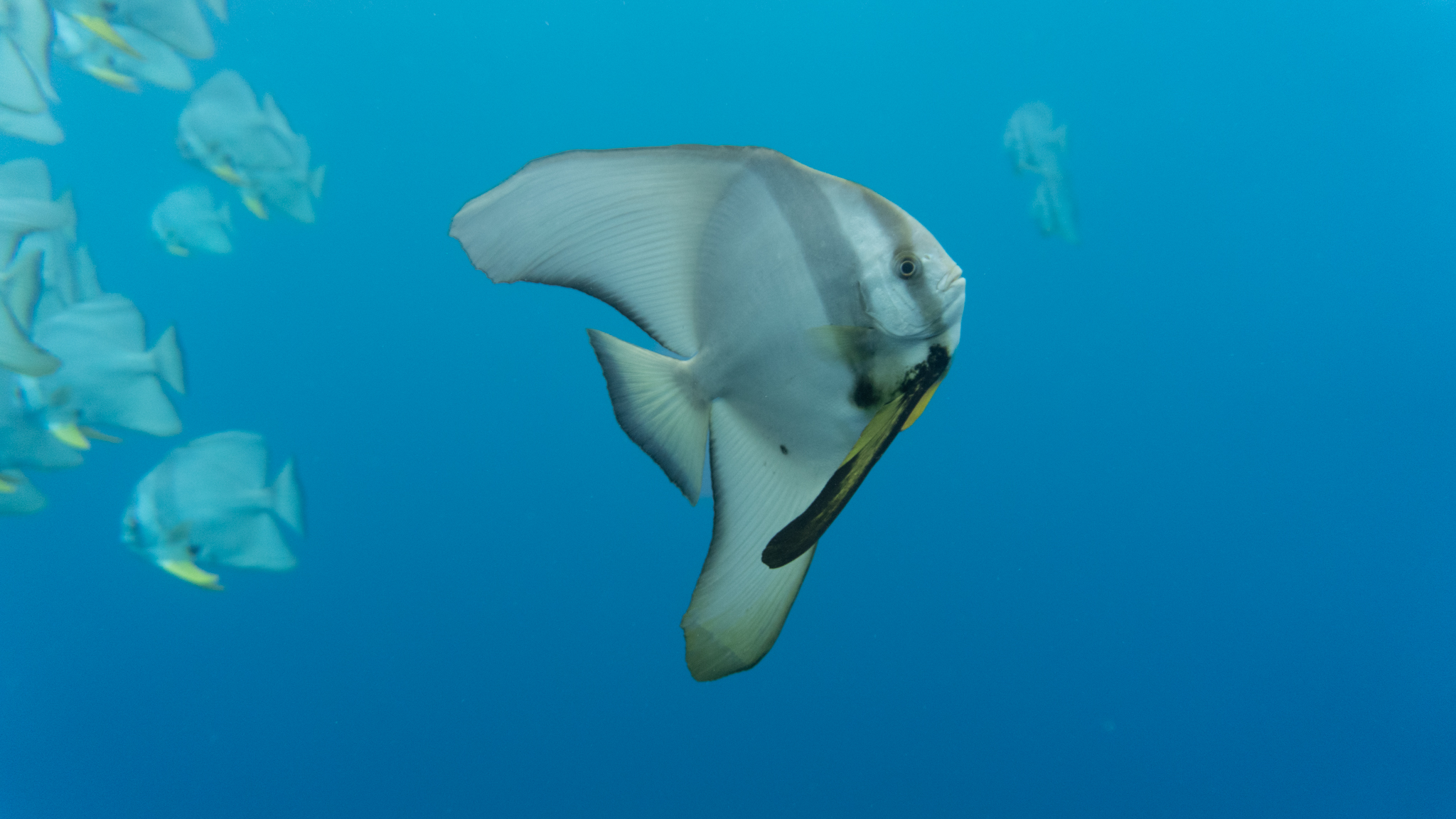
But no two individuals let you into their vulnerable lives in the same way. Batfish, a curious grey dinnerplate with bright yellow fins and a huge eye that resembles a black hole, backlit by a bright yellow burning galaxy, seek attention like a playful puppy happily reunited with their favorite humans.
They tend to swim in a school, over 50 strong, yet individuals will leave the safety of their numbers and spend an entire dive following divers’ fins as if we are one of their own. They especially like divers wearing yellow, as if they are saying “Hey, snap! we have the same fins on!”. I am constantly asking myself where this peculiar behaviour comes from.
Contrary to the batfish, the adorably named; spotted sweetlips, which is a similar size, lives in similar locations, yet has totally the opposite behaviour. They inhabit groups no larger than 3, yet will remain within touching distance of the reef, rarely venturing far from their chosen ledge.
Unlike the batfish that seek contact with the mysterious, clumsy, and noisy sky creatures dressed in neoprene, the sweetlips is perhaps the most timid of all the reef fish, and will dart back underneath their ledge if you show any sign of approaching. I have noticed it is not just humans that they are timid around, as other similar sized groupers provoke similar responses from the sweetlips, leading me to believe their fear isn’t strictly from unpleasant human interactions. They will however stare into your soul, waiting for signs of danger to subdue. Again, why? Why are they so shy when the batfish have so much confidence?
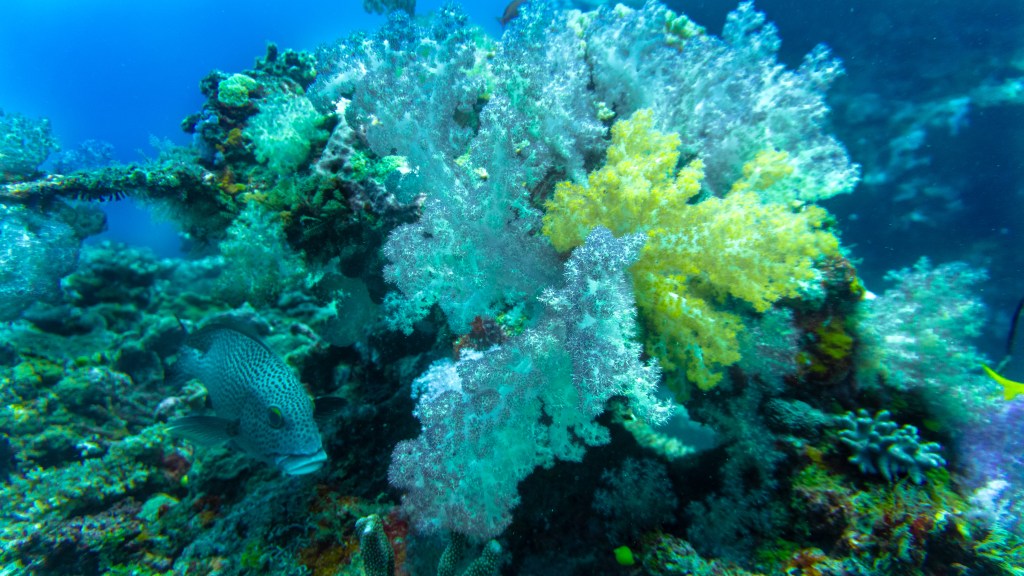
Can you see why they call it the spotted sweetlips?
Perhaps the most bold of all are the damselfish, the body the size of a tennis ball yet the bravery of a guard dog. They are the reefs farmers, tending for and cultivating their own patch of algae, which interestingly has been shown to be more healthy than algae left to grow unattended.
They lay their life on the line to defend their crop. I have been bitten numerous times by these intrepid fish when I accidentally get too close, and if anything continues to intrude onto their territory, there is nothing that will cause them to back down. I have seen them chase off fish hundreds of times their size with incredible bravery. Why do they risk their life for this algae, as though it is in short supply?
Interesting behaviour is displayed across every spare centimeter of our reefs, and it doesn’t stop there. The hammerhead sharks that live out in the blue have very complex behavioural patterns. We are confident that there are individuals with differing roles within the school. For example there are instances where one or two individuals will swim very close to us, grabbing our attention knowing that we cannot contain our excitement and must follow them. They will sometimes lead us purposefully in the opposite direction to the rest of the school!
We discovered this when some divers were unaware of these two ‘scouts’ as they continued swimming while the rest of us blindly changed direction and followed. They stumbled across the rest of the school while we were cunningly lured away.
The more I run through these cases of intriguing behaviour in my mind, the more questions I have. How do the hammerheads communicate to each other that the school wants some privacy, and then who decides who will lure the divers away?
Questions or answers?
Lately the school of hammerheads have been totally hidden from us. About a month has passed since we last saw a large group of them. We are confident they are still there as we do still see individuals, or pairs swimming around.
This week, in the blue I found a densely packed school of oceanic triggerfish. Metallic grey with oval shaped bodies which focus into a sharply pointed nape and mouth. They are instantly recognizable by their strange swimming technique, oscillating their dorsal and anal fins, leaving their caudal fins almost motionless.
Six or seven grey reef sharks made unthreatening passes through the group, when spotted a very small hammerhead joining the dancefloor, taking its turn to perform the tango by swimming in sharp circles below me. It was clearly a young individual, small enough to be totally overwhelmed by the reef sharks. Perhaps it was released from its guardians to play with the other sharks and learn how to socialise.
The encounter resurrected thoughts about the ‘scouts’ that I mentioned earlier. Was the intention to lure us away from the school to protect their juveniles? My suspicion is that this would explain why we haven’t seen the school for a while. Perhaps this juvenile I saw was the evidence I needed that they are raising young sharks!
Putting my conservation hat on.
There are no current protections around this area for scalloped hammerhead sharks, despite their critically endangered IUCN status. They are what’s known a K-strategists, meaning they invest a high amount of energy into raising a small number of slow growing offspring. The disadvantage of this is that if anything were to disrupt their lifecycle, such as overfishing, they are extremely vulnerable to population decline.
My theory that the school are raising young around Dreamhouse (the name of our dive-site) inspires me to pursue stronger protections for this population, to help ensure they face a better chance at raising future generations. I need much more evidence of this, but I hope that using my knowledge from Plymouth university- where I did practice designing a marine protected area as an assignment, in combination with my potential monitoring project, we can begin to work towards real shark conservation. My dream.
It is important to know why it is worth bothering to protect these creatures. They spend the majority of their life swimming in the open ocean, where only those who know where to look will ever see them, surely if they are taken away the reef will continue to function as normal right? Sadly, no. A group of apex predators this large play a critical role in balancing the ecosystem from the top of the food chain. Unlocking nutrients locked in the seabed by bottom dwelling crustaceans and stingrays, bottom feeding predators are the main driver for the mobalisation of energy from the deep seabed to the shallow parts of the reef for small fish and invertebrates. Losing this service may initiate a collapse, or at least large shift in the productivity of the rest of the reef.
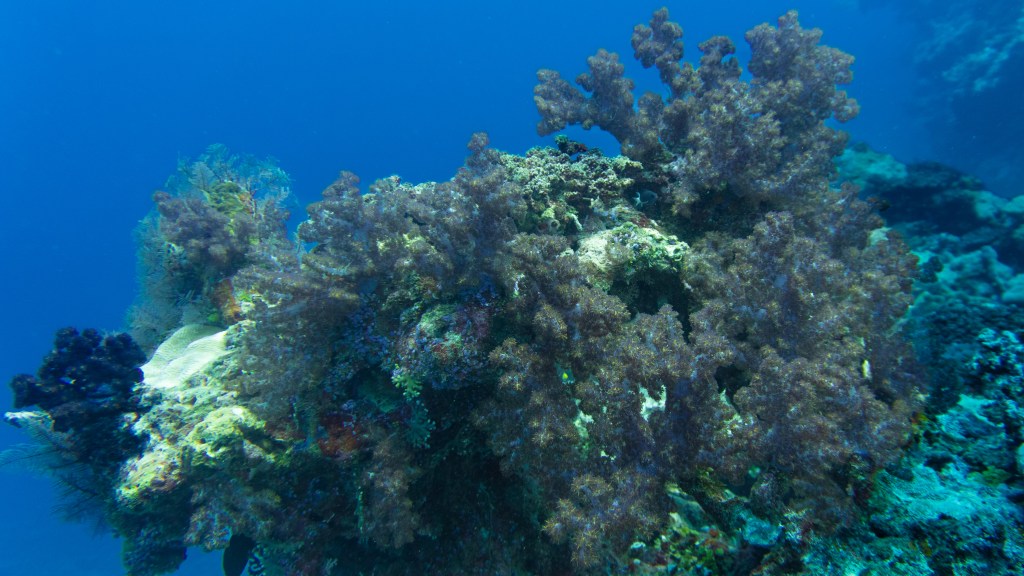
Colourful soft corals can be benefactors of the mobalisation of nutrition from deep water. They then grow by filtering out these nutrients from the water column and build a dynamic habitat on a reef.
Floating with sailors.
Some divers who I met this week were on their voyage through the pacific, and we shared some wonderful dives together, locally and on a trip to Namena where we had an epic encounter with – you guessed it – a hammerhead! I think they are the theme for this week… This enormous female swam right below me with such arrogance like she was the queen of the ocean, and I wouldn’t blame her. Shew as certainly in charge. The sailors and I become good friends, they gave me a tour of their vessel and we went out for some well seared aubergine and beers.
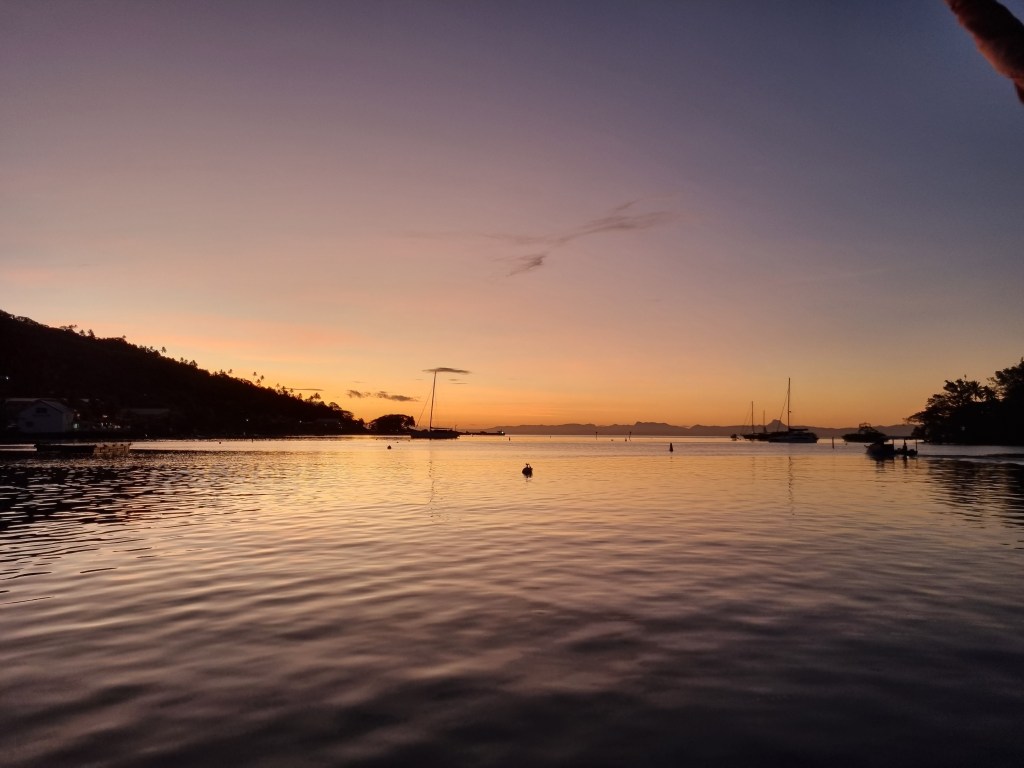
Being out on the water 24/7 must be tough at times, but the rewards of some of the best views in the world must be worth the trip.
The life of these sailors is so interesting, as most of the crew are not permanent, instead they offer their time and labour to their captain in exchange for passage across the ocean, stopping from island to island, and going from boat to boat until they decide they have had enough. What a way to travel, no flights, airport transfers, no showers. Just themselves, the crew, and the vast open ocean.
It was fantastic to spend some time with their lively crew, and 77 year old captain who had the energy and soul of young foal in the spring. I desperately needed the laughs and social unwind that they provided, after a very busy week of non-stop work.
End of the week, end of a chapter.
This week has been fueled by my own curiosity, asking myself many questions about the complex world that I get to call my office. Questions which have excited me, and inspired me to stay focused on my goals to understand and protect what I love. I have been kept very busy, and have not had much time for myself, to keep exploring, to try out new recipes, or to watch the documentaries about saving the oceans, highly recommended by my wonderful grandparents. December is cyclone season, so all of these tasks will be saved for a rainy (or windy) day so I am staying as busy as I can until those days arrive.
Staying busy has also helped me through, as we said goodbye to our adored family dog Alife. It was a sad time but we are all glad he can cause trouble at full speed once more wherever he is now. I like to think that he blessed the ocean for me today as I just returned from a trip to Namena, and had one of the most mind-blowing, awe-inspiring days at sea of my life. I will save this story for the next blog, stay tuned.

Thank you for making it this far, I hope you have enjoyed this reading. I hope in the coming days I will get some time to catch up with all the wonderful things my friends and family are sending and writing to me. I miss you all, and your kind words about my blogs put an enormous spring in my step, so thank you again. Until next time dudes 😉 <3.


 Sam Snaaps
Leave a reply to Mum Cancel reply