Wonderful weather we’re having right? A phrase only murmured amongst optimistic Britons on rare occasions throughout the year…
The only other instance when us Brits find the bravery to compliment the weather is when we leave our little island and visit somewhere a little closer to the equator, and how people love to remind me of this fact when they find out where I am from.
“You must love the weather in Fiji!” has filled the gap in conversation that opened up when I left the UK and stopped hearing “I can’t wait for the winter to end” so frequently. Weather is something everyone obsesses over no matter how wet and miserable, hot and humid, or anything in between.
Under pressure (or not).
We are well and truly in the wet season here in Savusavu. As reliably as the water company turn off my water every single afternoon (not cool man), the gunpowder grey clouds unleash theirs. Like clockwork each evening, my aluminium roof becomes the skin of a drum over my house, beaten by the marching band of the sky. The whole village becomes a parade of snare drums, the percussion only relenting to make way for growling thunder.
The arrival of rain every day inherits its reliability from the shifting seasons in the tropics. As the latitude of the sun approaches the tropic of Capricorn, it is almost directly overhead in Fiji at this time of year. The atmosphere is bombarded with energy – air, ground, and water all rising to sizzling high temperatures. We have mid to high 30’s every day with rainforest level humidity. Scorcher.
The solar energy increases the kinetic energy in the air, meaning all the small particles vibrate violently, bumping an crashing into each other like rush hour at a metro station. All of these collisions cause the air to expand, rising up towards their energy source and leaving a pocket of low pressure in its wake.
Being in the middle of the pacific ocean, there is a LOT of water around, and one property of our atmosphere is that the hotter it gets, the more water vapour can be stored withing the gas particles. The combination of hot air and a constant supply of water gives us a very humid climate with almost no wind.
As the end of the day approaches, and our part of the world finally turns its head away from the beaming sun, relieving us of the searing heat, the atmosphere cools. Now that the air is saturated with water vapour, a reduction in temperature will start to condense that water into droplets, expelling it with haste like a rogue grain of sand landing on the well maintained anemone of a clown fish.
The consequence is that every day, with the reliability of a well crafted timepiece, the heavens open the flood gates and unleash a torrent of the heaviest rain you can experience anywhere on Earth. It is truly remarkable how heavy the rain here can be.
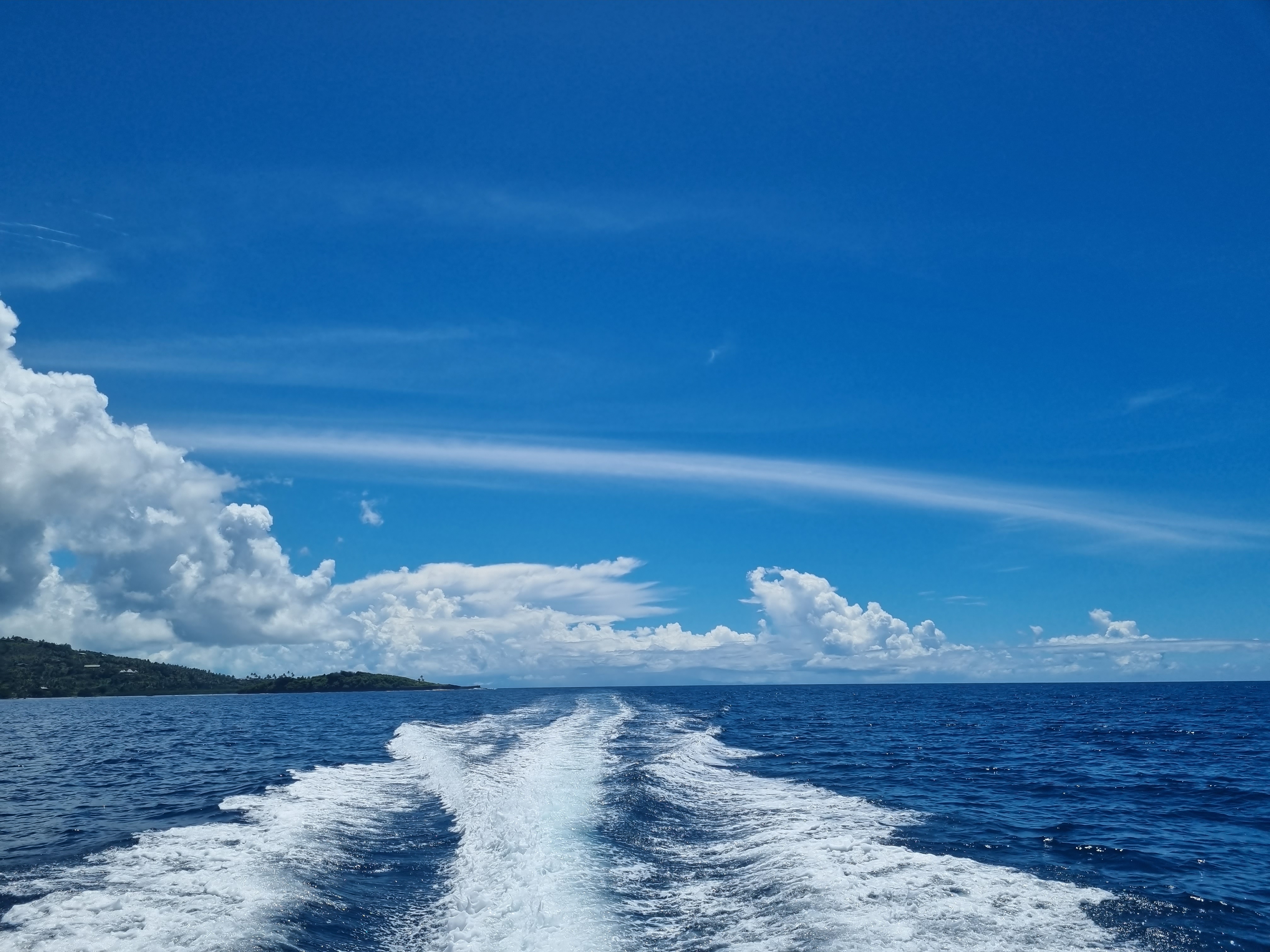
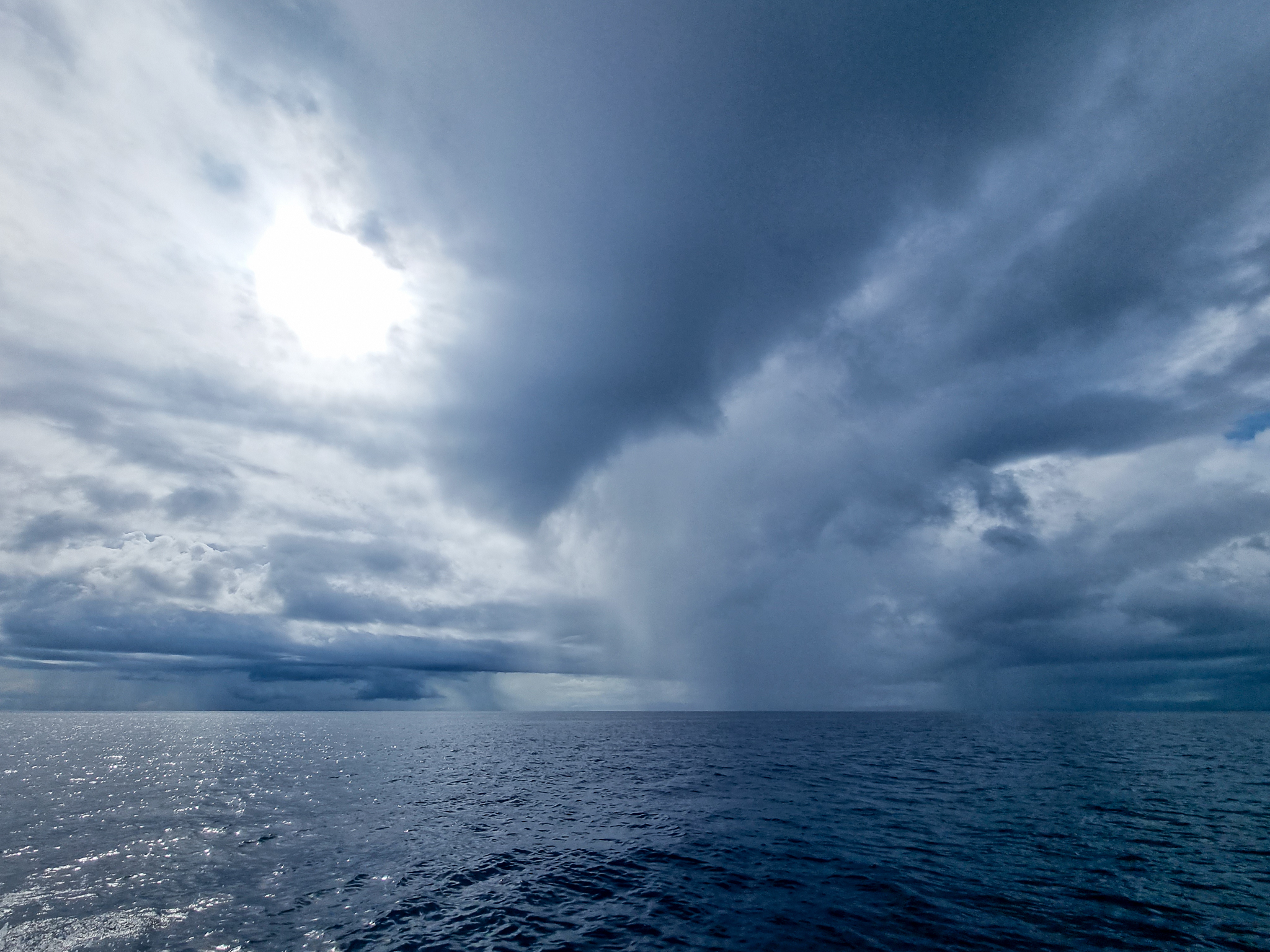
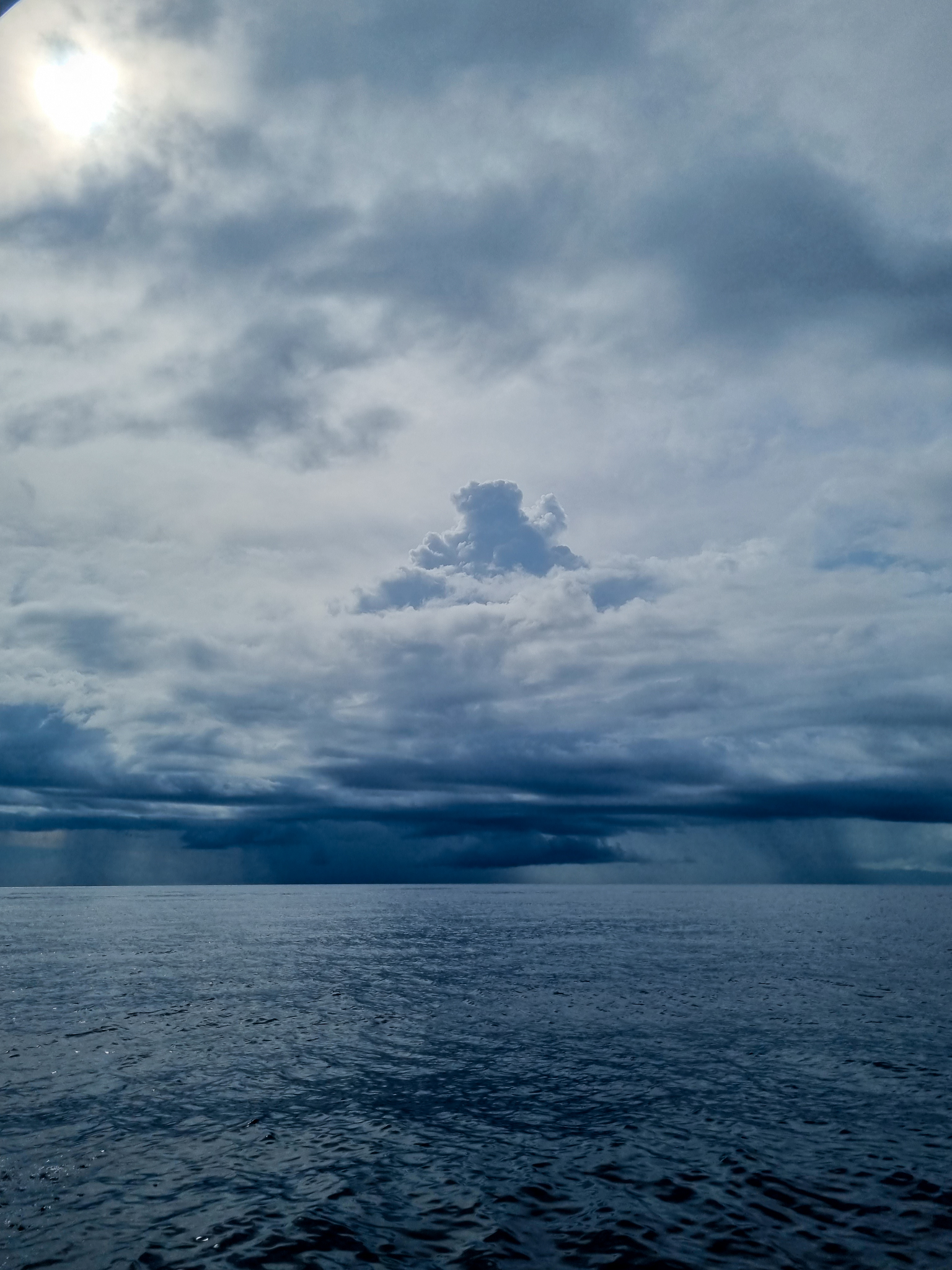
I imagine the meteorologists among us would find the cloud formations as fascinating as I find the underwater world, and could probably give us a brilliant lesson about the processes that go on above our heads. The skies are wonderfully dramatic and deserve more appreciation!
The Bloom Below.
The winds have blown, and the winter was a difficult time to be at sea thanks to the large and powerful waves that have persisted for months. Now that we are in the rainy season, and the area of low pressure created by the hot, rising air has given us a well earned break from the wind, and the ocean has been glass-calm for the last couple of weeks! This is excellent news from the perspective of our seasick visitors, but the effects underwater have been noteworthy too…
Wind, waves, and well mixed surface water characterised winter. Constant mixing, and overturning of water masses between the surface and the deep, dark, depths, sometimes only a stone’s throw from the sheer, volcanic coastline limit the light availability for photosynthesising plankton. When either light or nutrient availability is limited, phytoplankton are unable to bloom, and therefore the seawater remains crystal clear during this period of the year.
Now that the wind has died – and just like my grandfather trying to sail we are stuck in the doldrums – that vertical mixing with the ocean has halted, the warm water, along with all the plankton inside, get trapped at the surface. The plankton are no longer sucked down below the photic zone, and light is not longer limited! Their growth suddenly explodes and the coastal waters bloom into snotty green clouds.
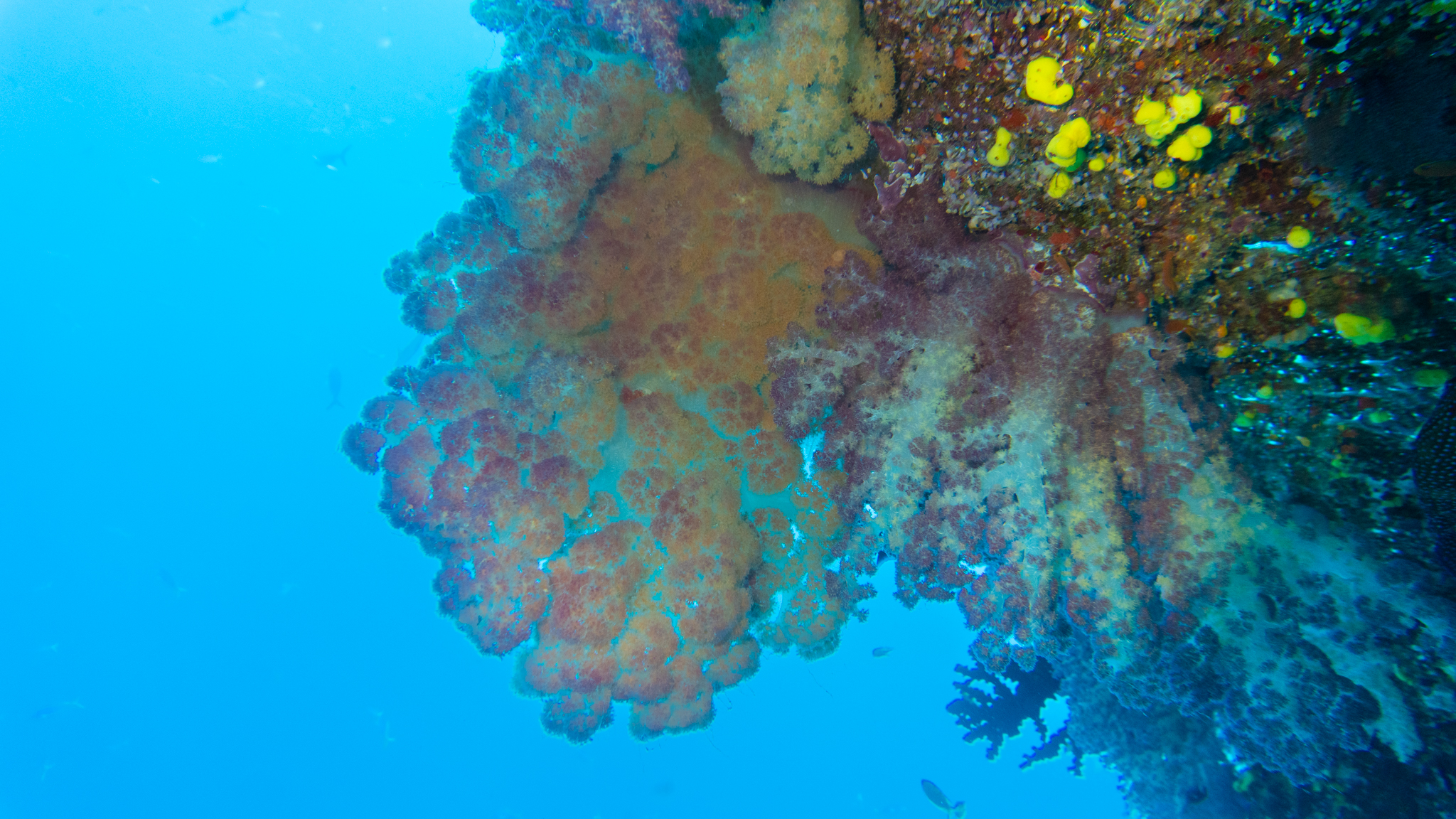
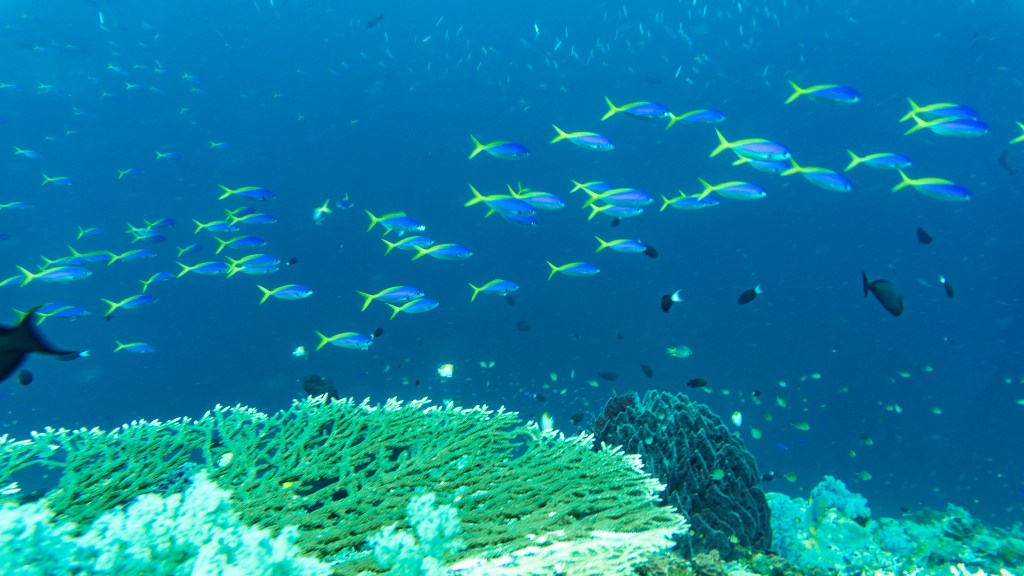
While many people react with negativity that the visibility has fallen below the standards of Instagram, I find that the diving can actually get better in many ways. Plenty of food for the soft corals to filter out of the water column entices the arms of the Dendryphthia to stretch out and feast, filling the reef with more colour than ever. Small fish like fusiliers flutter from one mouthful of plankton to the next and create a shimmering dance of life from the reef all the way to the surface. Even the big creatures come to play.

After over a year of diving in Fiji, I finally saw my first manta ray underwater here, the curse has been broken! I am confident that I have the poor visibility to thank for this manta cruising by, mouth gaping wide, to scoop up this bottomless green buffet. The cherry on top was that this dive was part of a diving course which I was teaching, and so my fortunate student got to see this ocean giant on his third dive EVER, while it has taken me a handful more to enjoy this magical experience…
Busy Buzz.
I have just made it through my busiest few weeks of work yet, and it has been exhausting. Repairing, rebuilding, and servicing boat engines, teaching students, and trying to integrate myself into the community to cure my loneliness have had me operating at full speed from dawn to dusk, every day. Consequently I was unable to dedicate any time to publishing a blog last week, as any other time I had was spent keeping the local mosquito population well fed, and making sure I had something to eat myself, so I apologise!
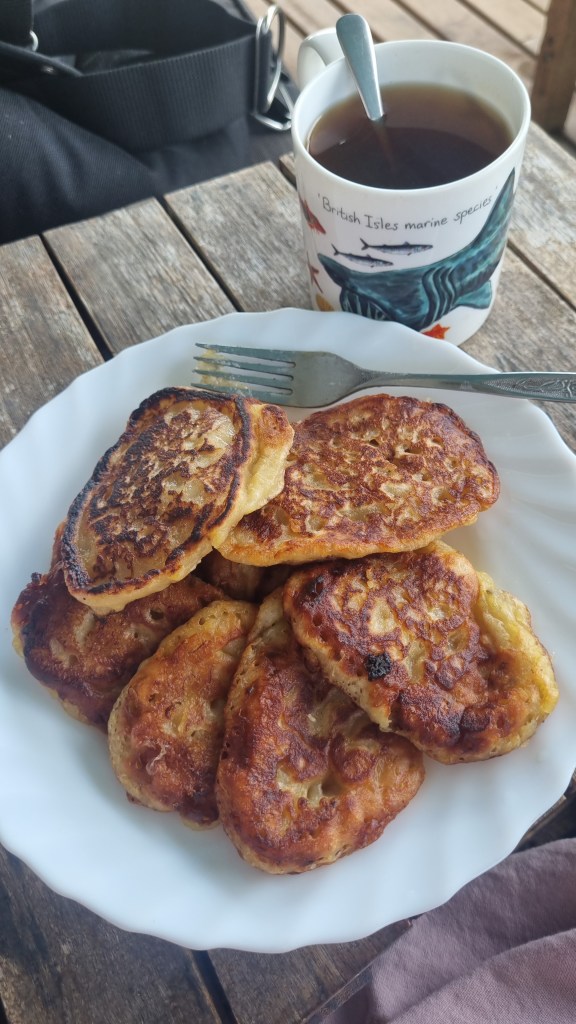
Hopefully the busy storm has passed and I can get back to focussing on my needs, taking lots of photos for my blogs, and learning about the marine environment. My first day off for a while started with a long sleep and a plate of tasty Indian banana pancakes (gulgul), which is just what I needed to take on a new week of whatever surprises Savusavu has waiting for me, hopefully lots more manta rays…
Thinking of my friends and family back home, missing you all, and sending you lots of Fijian love <3.


 Sam Snaaps
Leave a reply to Sam Franks Cancel reply